 New World Screw Worm Information
Please use this link for the most updated information on New World Screw Worm. It contains information from the USDA's coordinated One Health response to combat NWS and has information specifically for veterinarians, livestock producers, pet owners, researchers, healthcare providers and the general public.
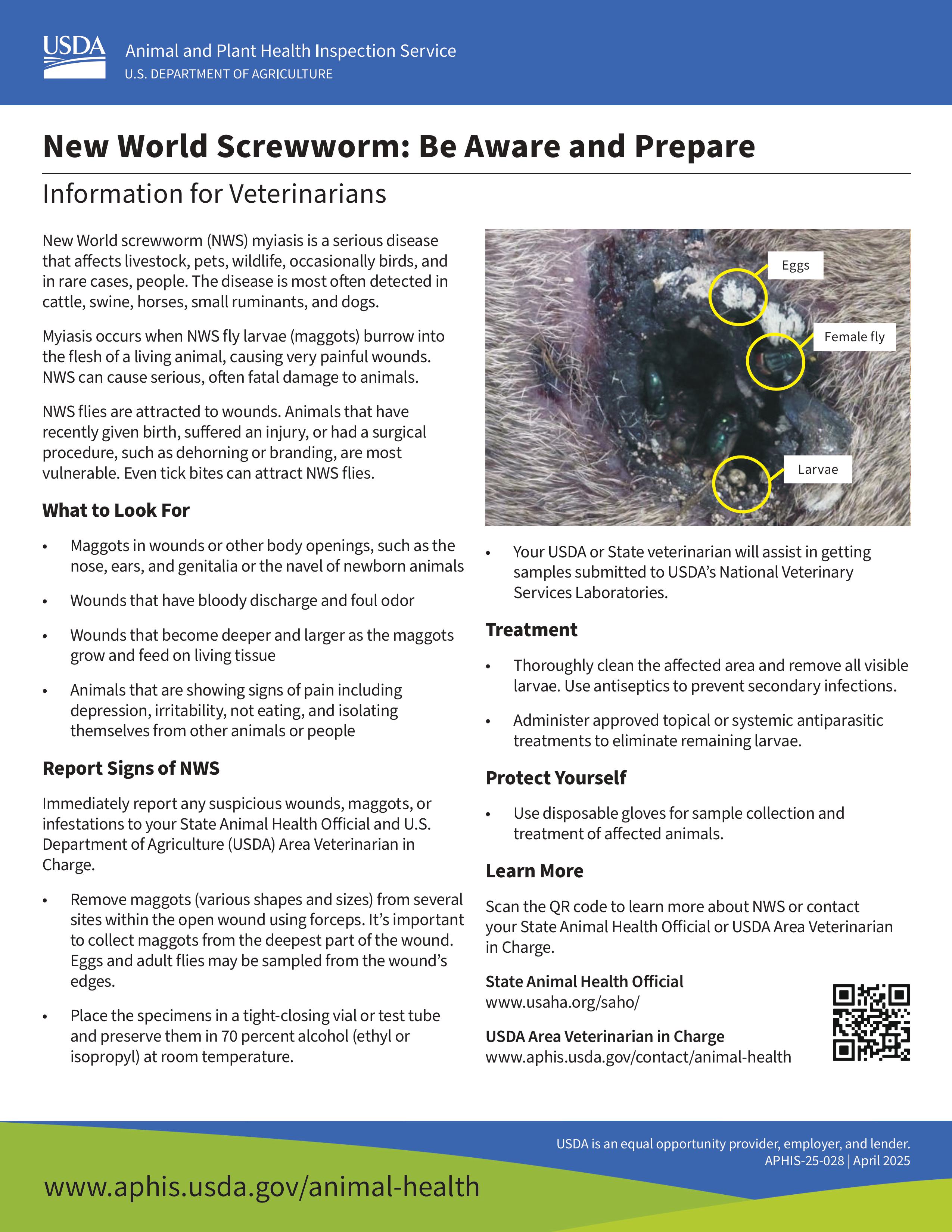
Veterinarians, please make use of this great fact titled New World Screwworm: Be Aware and Prepare. Please download this sheet made available by USDA APHIS containing information on what to look for, how to report signs of NWS, and information on how to learn more about the disease.
As a reminder, New World Screw Worm is primarily a risk to livestock and pests and the threat to humans and pets in very low, particularly in the Northeast.
Information from the AVMA Regarding the Department of Education's Proposed Rule Changes for Accreditation:
Please click on the following links for :
AVMA's public comments to the Department of Education
AVMA's Letter to Colleagues Regarding Understanding of the Accreditation Changes
Wedgewood Pharmacy Recall
Compounded Veterinary Medications Affected: Products intended for companion, equine, exotic, zoo, wildlife, and aquatic animals (not food-producing animals) shipped between February 18, 2026 and October 6, 2026 to veterinary practices, pharmacies, and other customers nationwide in the U.S.
A complete list of affected products (including powders, pastes, oral suspensions, injectables, ophthalmic ointments and solutions, ear solutions and suspensions, topical sprays, and gels), lot numbers, and expiration dates are available at www.wedgewood.com/recall-lookup
This recall is due to inconsistencies in the reliability of certain analytical testing data generated by their laboratory, potentially resulting in subpotent and/or superpotent products.
Please examine inventory, quarantine any affected product, and contact Wedgewood’s recall services by phone at 866-562-5931.
If you have dispensed affected product, identify and notify customers of the recall
Adverse reactions or quality problems experienced with the use of this product may be reported to the FDA at 1888-FDA-VETS or online at http://www.FDA.gov/reportanimalae
Eastern Equine Encephalitis (EEEV) Update from the Vermont Department of Health
Please see this letter sent out July 15 from Vermont State Public Health Veterinarian Natalie Kwit regarding Eastern equine encephalitis virus (EEEV). Vermont recently experienced its highest level of EEEV activity on record, and as mosquito activity increases, the Vermont Department of Health is asking for your partnership in preventing illness through vaccination, identifying suspected cases, and submitting specimens for testing. Specific instructions for testing, including sample submission, are detailed in the letter.
National Association of State Public Health Veterinarians Position Statement On Rabies Vaccination
Please see the Position Statement released by the NADSPHV Supporting Vaccination Against Rabies for Dogs and Cats. In the position statement it is stated that "NASPHV encourages state and local authorities to establish policies and programs that help to prevent and control rabies, including those that require owners to protect their animals through regular rabies vaccination". It is encouraged to share this position statement with clients, policy makers, constituents, and the public at large.
New Webinar Provides Latest Guidance on New World Screwworm- 1 free CE Credit
New World screwworm: Detect, prevent, and treat presents the latest information from the U.S. Department of Agriculture, Food and Drug Administration, and Centers for Disease Control and Prevention to help promote understanding of New World Screwworm to help veterinarians detect, prevent, and treat infestations. This resource delivers the latest guidance on NWS offers one Continuing Education (CE) credit for participants. Please Click Here to access this FREE webinar
IMPORTANT INFORMATION ABOUT RABIES FROM USDA WILDLIFE SERVICES
In Vermont, USDA works with the Vermont Department of Health, Vermont Fish & Wildlife Department, and the Vermont Agency of Agriculture, Food, & Markets, to distribute oral rabies vaccine (ORV) baits targeting the raccoon rabies virus variant (RRVV) and conducts enhanced rabies surveillance (ERS) in northern Vermont to monitor for expansion of raccoon rabies. Close to 10 million ORV baits have been distributed by USDA in Vermont since 1997 to protect people, pets, livestock, and wildlife from this deadly disease. The continued collection and testing of USDA samples is critical to the ongoing success of the ERS effort to eliminate RRVV from Vermont.
Due to the ongoing expansion of rabies into northern Vermont, please report any dead or strange acting raccoons, skunks, foxes, coyotes, or bobcats to the USDA Vermont Rabies Hotline (1-800-4-RABIES; 800-472-2437), especially from the counties of Grand Isle, Franklin, Lamoille, Orleans, and Essex. Vermont veterinarians are a critical partner for rabies surveillance, since wildlife that can carry rabies may be reported during pet exposure evaluations.
For more information on rabies in Vermont, and for guidance on pet exposures to rabies and animal submissions for rabies testing, please visit: https://www.healthvermont.gov/disease-control/zoonotic-diseases/rabies
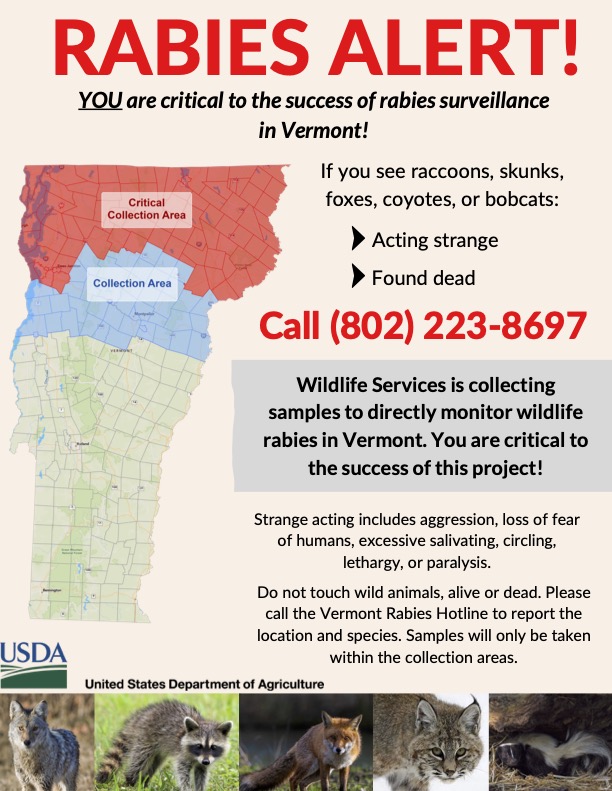
Updated Rabies Post-Exposure Prophylaxis Guidance: VDH Health Advisory
Animal rabies cases are rising in Vermont. So far in 2025, 36 animals have tested positive – mainly raccoons, bats, skunks, and foxes. Most cases are in Orleans, Chittenden, and Franklin Counties, but have been reported throughout the state.
Rabies is fatal to humans if medical care is not given before symptoms start, but rabies postexposure prophylaxis (rPEP) is costly, complex, and in limited supply. Please click here for recommended actions when considering post-exposure treatment




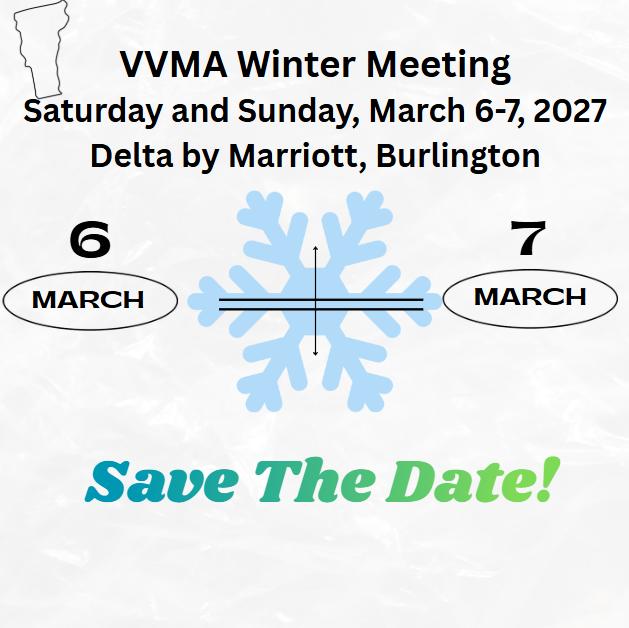 Delta Hotel Marriott, South Burlington, VT